Applying Music Theory To Basslines
This is a video intending to show how you can make use of some of the music theory I’ve covered in the Music Theory For Bass Guitar series in your own bass playing.
Lesson Material
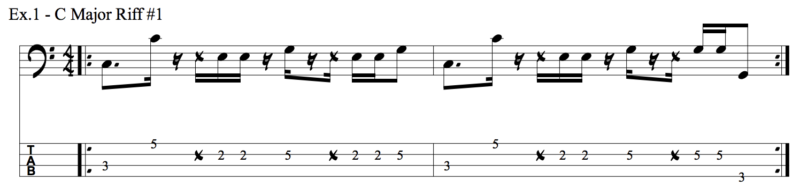
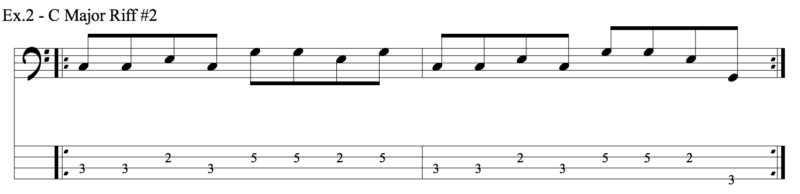
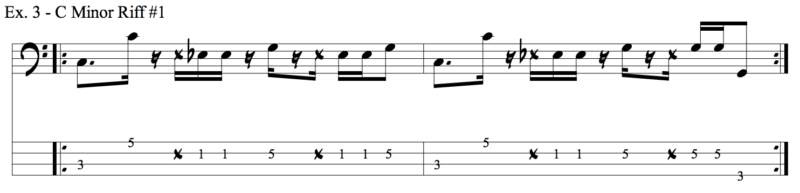
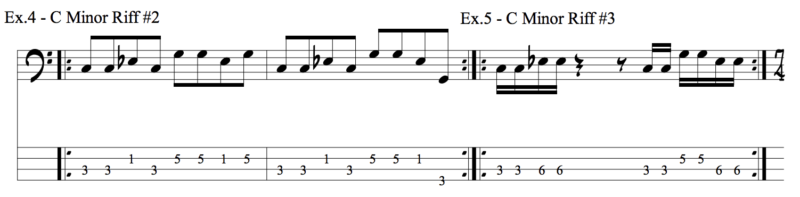
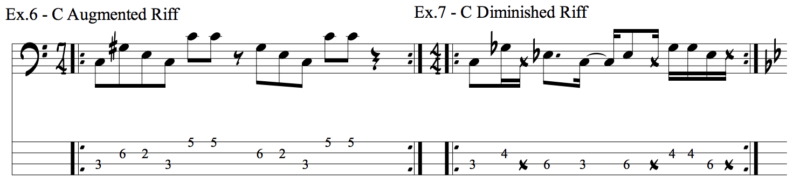
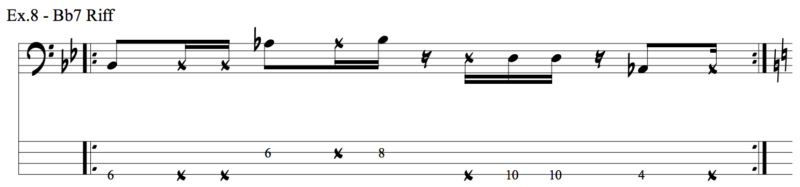
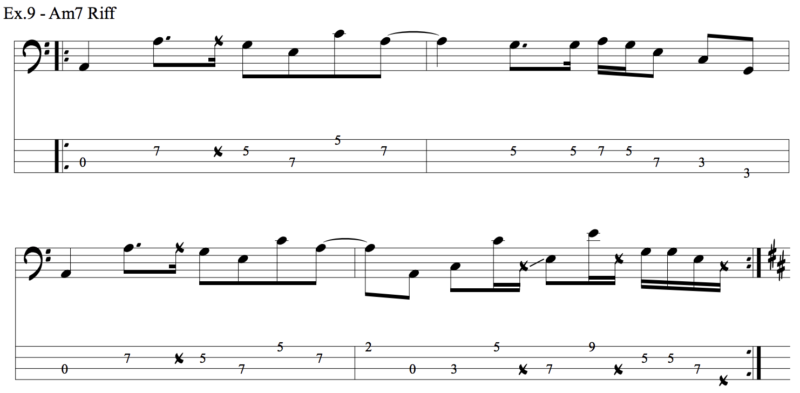
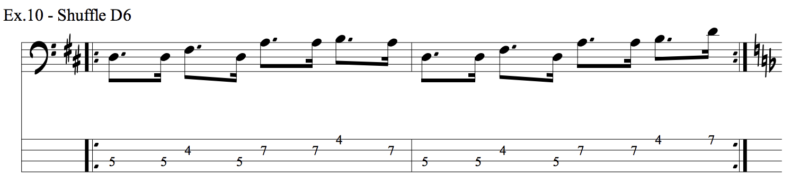
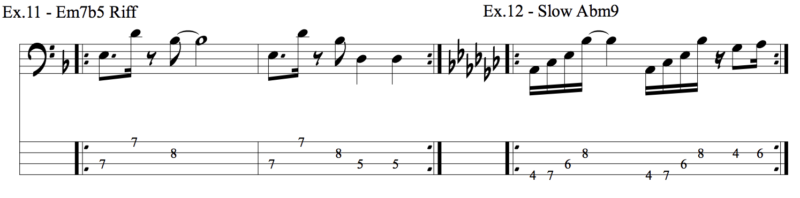
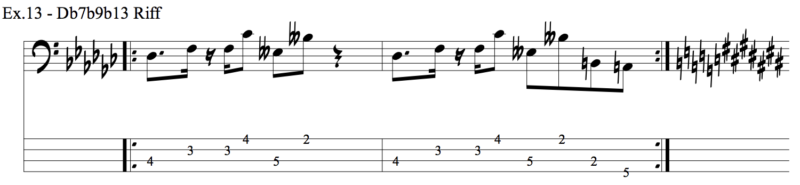
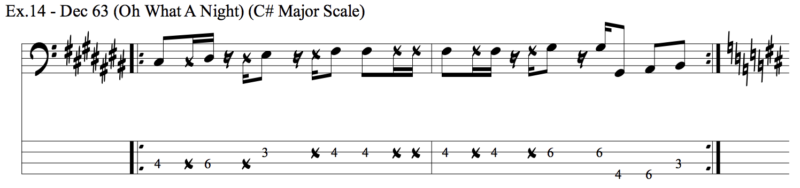
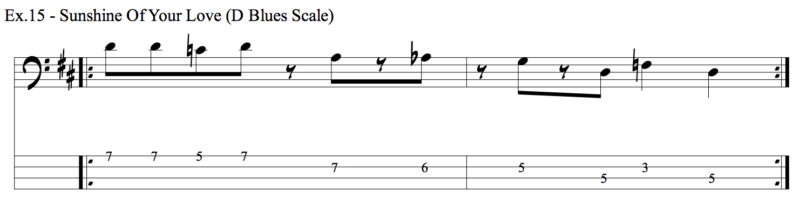
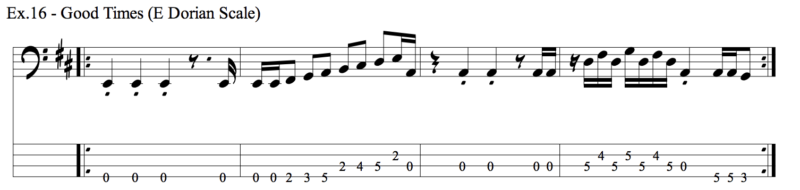

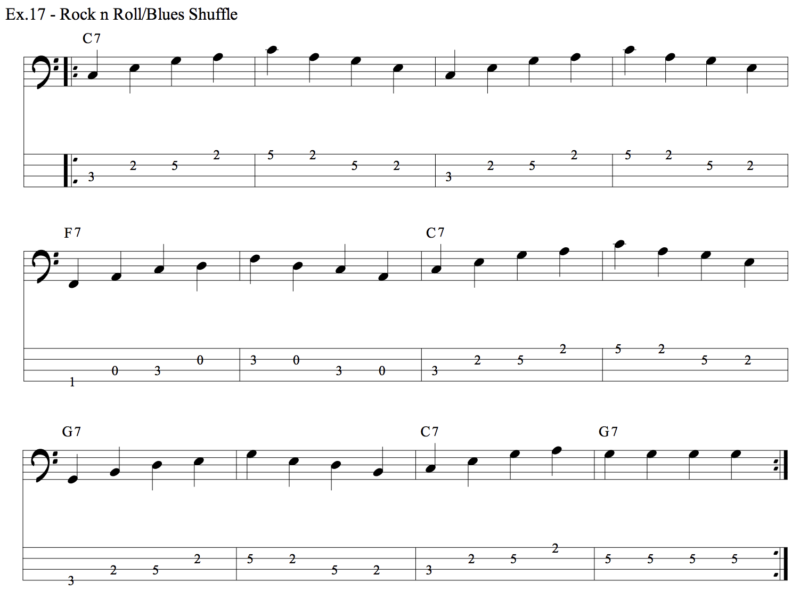
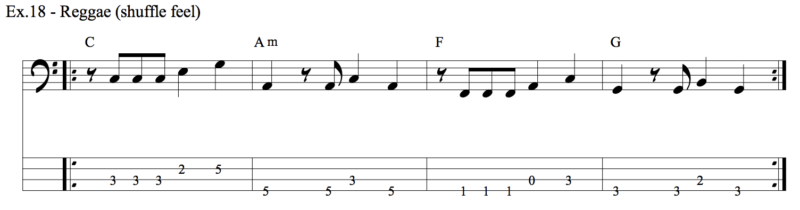
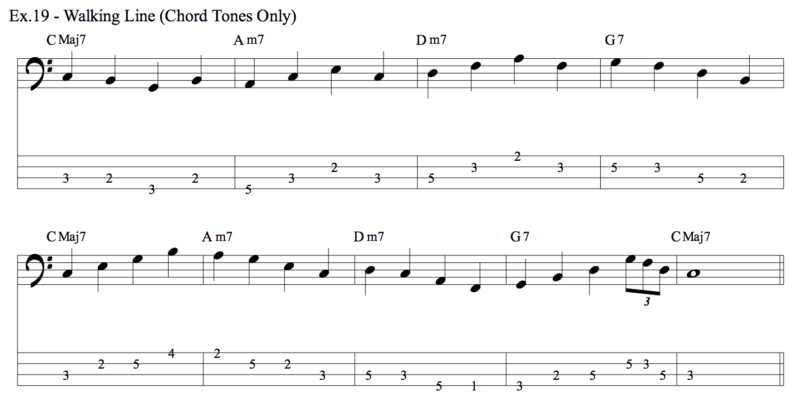
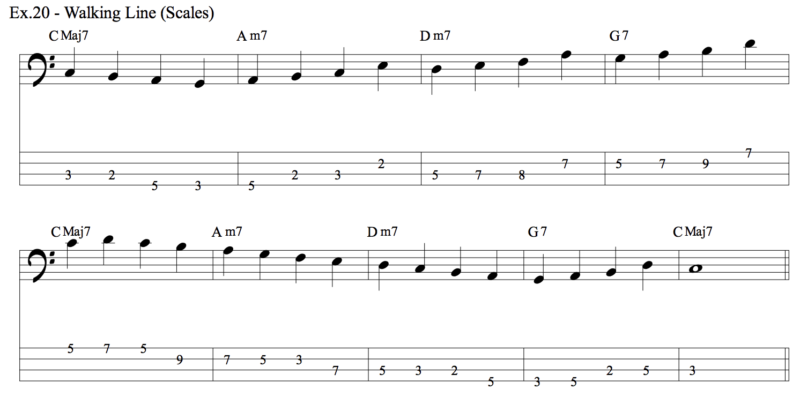
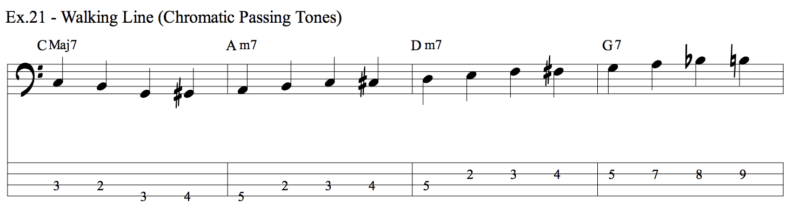
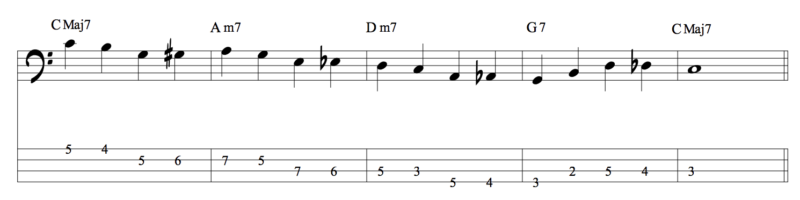

This is a video intending to show how you can make use of some of the music theory I’ve covered in the Music Theory For Bass Guitar series in your own bass playing.
This is the first of two lessons covering the popular topic of Modes. What Are Modes? Modes arescales that begin on different degrees of the major scale. Let’s take the C major scale for example: C D E F G A B If we play this scale from the 2nd degree (D), we get: D E…
This lesson covers the most basic building blocks of music and music theory: Intervals. This first part covers semitones, tones and intervals of the major scale. It also has a look at the construction of the Major scale. This is all shown with reference to the bass guitar neck. What Are Intervals? An interval is…
This week I’ve got a brief, simple exercise for you that will test your knowledge of keys, arpeggios and harmony. I personally think that less than 1 per cent of bass players will play it right on the first attempt simply because it isn’t the kind of exercise we generally practice. Obviously, any player with…
This lesson covers the Chromatic Scale and the different fingerings for bass guitar. The Chromatic Scale actually comes in two different flavours: Melodic and Harmonic. Both scales are covered in this lesson. Diatonic And Chromatic Notes In major and minor keys, the scales we use to make up all the melodies and chords within those…
This video continues the look at chords for bass guitar by delving into seventh chords. Lesson Material Note: Throughout the lesson, the chords shapes built from an A string are using a C root eg. Cmaj7. The chord shapes built from an E string are using a G root eg. Gmaj7
When you think music ‘theory’ a lot of you out there probably start thinking about stuff like Scales or maybe Chord Tones or maybe even the whole study of Functional Harmony. Well, that’s all useful and important stuff to learn but there’s a very small area of ‘theory’ bass players often neglect and it’s something…
Mark—really have been enjoying and getting a lot out of your lessons. I want to click the “like” button but for your lessons videos I don’t see one to click. Appreciate your help.
Such a good lessen! Thanks!!
Thanks a lot Andrew.
Mark, great job… again :)
do you happen to have some GP5 files instead of pdf?
thanx
fred
Thanks a lot. Don’t have any GP5 files at the moment because a lot of the music I’m presenting is best presented in standard notation. I only add the tab so non-reading players can also benefit from the lessons but I might look into the GP5 file format at some point. I don’t really have any experience with it.
Hi Dear Mark
All your materials are great.I have to thanks a lot for donating such a interesting and helpful lessons.
having some GP5 format is also my request .because now I write all your staff in GP5 and then start to practice .specially for slap lessons which have more dead note and are faster.I slow down them and try with loop.but writing in GP5 wastes a lot of time.
I would be grateful if you could add the file with the format of MIDI.it means when you write your note in your program after saving as PDF also save as MIDI format.its very easy then to import it to GP5 by us.
It would be huge help to all users of your amazing site and lessons by your sweet teaching.
once again thanks.best wishes
Rene
If you enter a tab into Guitar Pro you can chose “Show Standard Notation” and it will show them in tab and standard notation. It’s a good software and there are also free Guitar Pro file readers (i.e TuxGuitar), so this would make sense for even those who can not afford to buy anything. Guitar Pro is cheap and let’s you also export the files into pdf. I suggest you take a look into it, since that would be helpful and it is really fast and easy to enter a tab into it, so perhaps you could even save some time.
I love your videos and hope you will continue on with your great work.
thanks for all your lessons! Great material
Mark thank for such good information . Mark I only have 5 string basses do I need to get a 4 string . Also would fender squire work ok . Also could share with me your amp , drums machine loop station or do you use some kind of computer software and PDF files . what is your rig rundown.
Thank walter
Hi Walter. No you don’t need to get a 5 string if you’re happy with your 4 string. Just try to apply anything I teach to all 5 strings. Learn the stuff on the EADG strings first and then expand. A Fender Squire would be fine. The Vintage Modified series is supposed to be a very, very good cheap bass.
When you hear me playing on the lessons I don’t use and amp. I run straight into a digital recording unit. I have a small stage monitor speaker to monitor my playing but I don’t bother would a full rig setup. I occasionally use a Digitech Jamman looper, a TC electronic Flashback delay, Hall Of Fame Reverb and a Markbass Compressore. I recently sold some of my gigging amp setup. I used to use a rack setup of a Glockenklang Bass Art Preamp into a QSC power amp and then into a Schroeder 1212 cab. But I recently sold my Glock. It was amazing but now just want a smaller setup. As for writing music examples, I use Finale. I also have Sibelius but I’ve used Finale the longest so it’s always the one I go back to.
Mark, I will never look at music theory ever the same again after watching this vudeo. You have made the material very relevant and mist of all…fun. i have a long way to go. But, this lesson was a lightbulb moment for me. Thanks for everything you do.
ChiquiRaveloski
Hi Mark i´ve enjoyed all this material eventhough i am an old bass player but without any notion of music theory. Your teaching is leading me to new horizons in my playing. i am sorry not to suscribe to premium level or otherwise donate a few bucks in order to recognize your job because i live in a country (Venezuela) where there´s a money control and nobody can freely buy dollars or euros and transfer it to other countries. Again i want to thank you for this videos and learning material
Hi Mark. . First time seeing your lessons ..Applying music theory to your bass lines .
Very well done… One big major problem that I have is., that I can.t find any lessons
Or books on , applying music theory to the real world. Understanding what all of this
applies too ? Mayor, minor , dim, aug, 7th’ s , Modes . What style type of music
Modes could be used for.. YOU COULD KNOW ALL THE THEORY IN THE WORLD
BUT NOT KNOWING WHAT TO APPLY IT TO MAKES IT VERY FRUSTRATING.
I would like to know what you think about this matter…ALSO what kind of drum machine
You use.. I’m looking to get one.. Please respond .. Thanks keep up the good lessons!
I
Thanks Mark.Your lessons are changing my bass playing abilities. Thanks alot
Mark, Great lesson. Can you point me to a lesson that explains the x’s in the notation of the PDF that accompanies this lesson, unless it would be easier to explain it in a reply? Still very new, but try to read the musical scores as well as the tabs.
Thanks,
Luke Hutner
The x’s are ghost notes. Check out some of the Ghost Note lessons to find out more about them
Example 12 sounds and seems like Am(natural)9 to me. Am i wrong? Btw you are great. Keep up the good work!
i was getting lost with your theory lessons until I got to this one. Great way of showing all of what you’ve been teaching. While I’m not exactly there yet, this is the wax on/wax off scene where Daniel-san finally gets it. LOL
when he says “now for something completely different” it reminds me of monty python