Your Bass Scales Are Stuck In A BOX
So, I’m guessing a lot of you know a major scale. Some of you know a minor scale. And a ton of you know your major and minor pentatonics.
Scales are brilliant things to learn. You learn the notes of a key, you get raw material for bass lines and improvising over specific chords, and they’re great for technique. But here’s the thing — I’m also guessing most of you learned them in one octave. That little box shape from C to C, or D to D.
If you want to go beyond the absolute basics, you’ve got to break out of that box. You should be seeing a scale as a set of notes across the entire fretboard — and the good news is, it’s not hard to do. In this lesson I’ll show you how to turn that one-octave box into a flowing two-octave line, using one simple pattern as your doorway between positions.

NEW: Scale Craft For Bass
Fretboard fluency over any chord, key or mode — 30% off at launch. See the course →
Start with the box
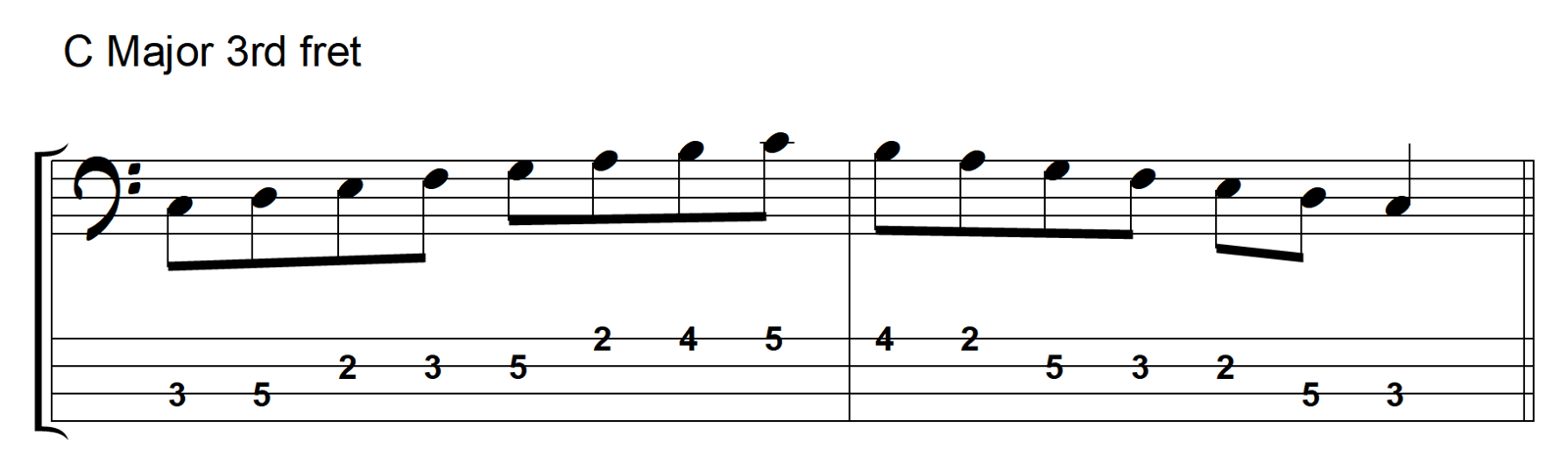
Let’s take a simple C major scale: C D E F G A B and back to C. You all know this one. Here’s the basic one-octave box, starting on the 3rd fret of the A string with your 2nd finger:
C D | E F G | A B C (A string · D string · G string)
That’s the box I’m talking about. Comfortable, familiar — and a bit of a trap if it’s the only place you ever play the scale.
Move the box to other C’s
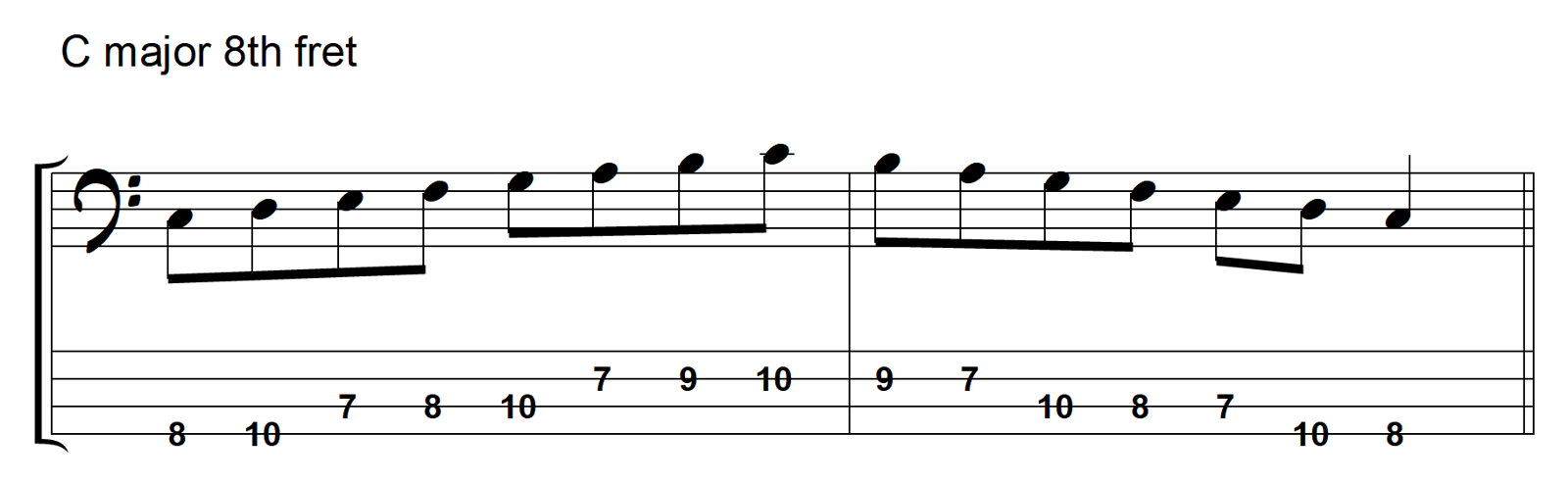
The first step to broadening your real estate is simply moving that same shape to other C’s on the neck. For example, play it starting from the C at the 8th fret of the E string. Same shape, same fingering, new area of the fretboard.
That’s a start — but now we’ve got separate islands. What we really need is a way of travelling between them. And for that, we’ll use two simple exercises: learning the scale on two strings, then using that pattern to play it over two octaves.
The 2-string pattern
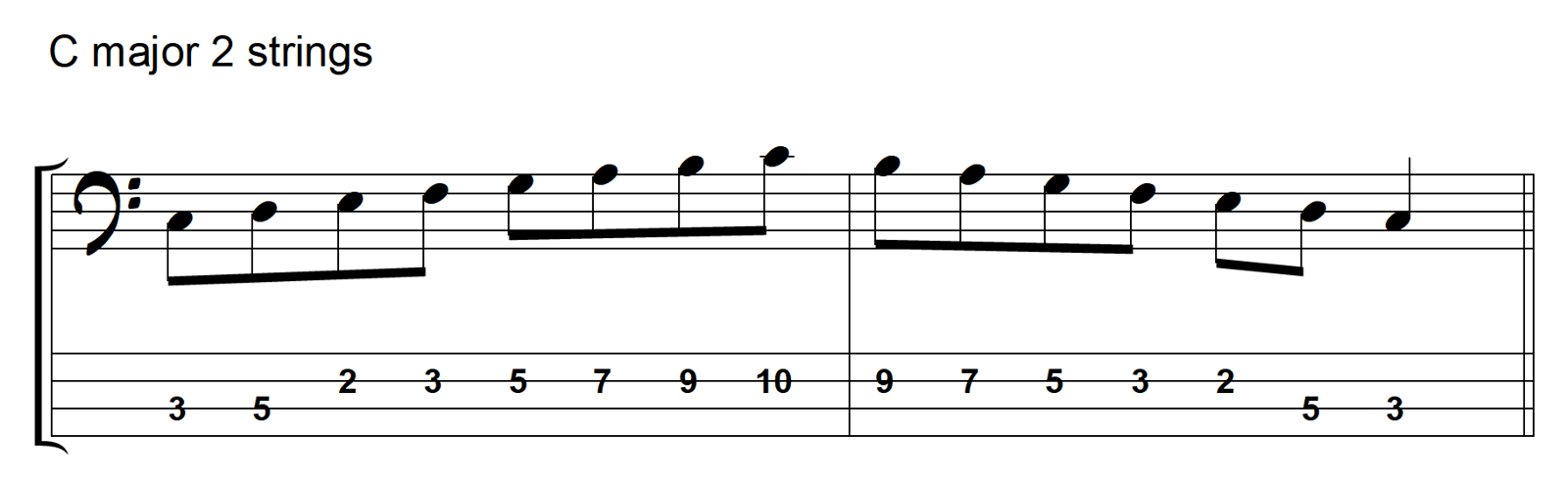
Back to our C major box at the 3rd fret. Look at what we’ve got: three strings in play. C D on the A string, E F G on the D string, and A B C on the G string.
To play the scale on just two strings, all we do is take that top group — A B C — and move it onto the D string. That means shifting up two frets (a whole step) from the E F G pattern into the A B C pattern.
Practise that round and round until the position shift is sorted. Aim for full note duration and a clean shift: play slowly, but make the shift itself quick. Then gradually speed the whole thing up. Once it’s comfortable, try taking the pattern up the fretboard chromatically.
Doorways between positions
Here’s where it gets useful. That 2-string pattern now acts as a transition — a doorway for moving from one scale area to another. Remember our two C major boxes, at the 3rd fret of the A string and the 8th fret of the E string? Now we can move between them:
- Play up from the 3rd fret pattern and come down the 8th fret pattern.
- Then reverse it — up the 8th fret pattern, down the 3rd fret pattern.
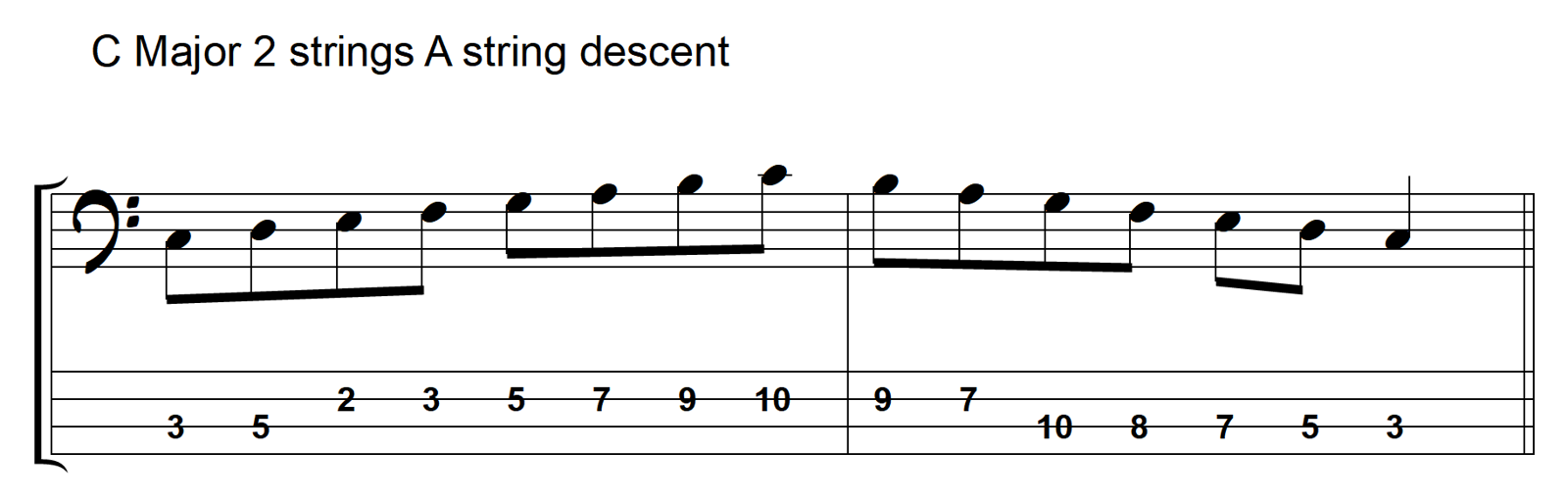
- Now climb from the 3rd fret pattern to the 8th fret pattern, but come back down using the A string for the transition.
That’s two different doorways for shifting — and the more doorways you know, the less stuck you’ll feel.
Building the two-octave scale
Now let’s use that 2-string pattern to create a two-octave C major scale. We’ll start with the 8th fret E string pattern, because there’s less shifting to do.
- Play the one-octave scale from the 8th fret of the E string.
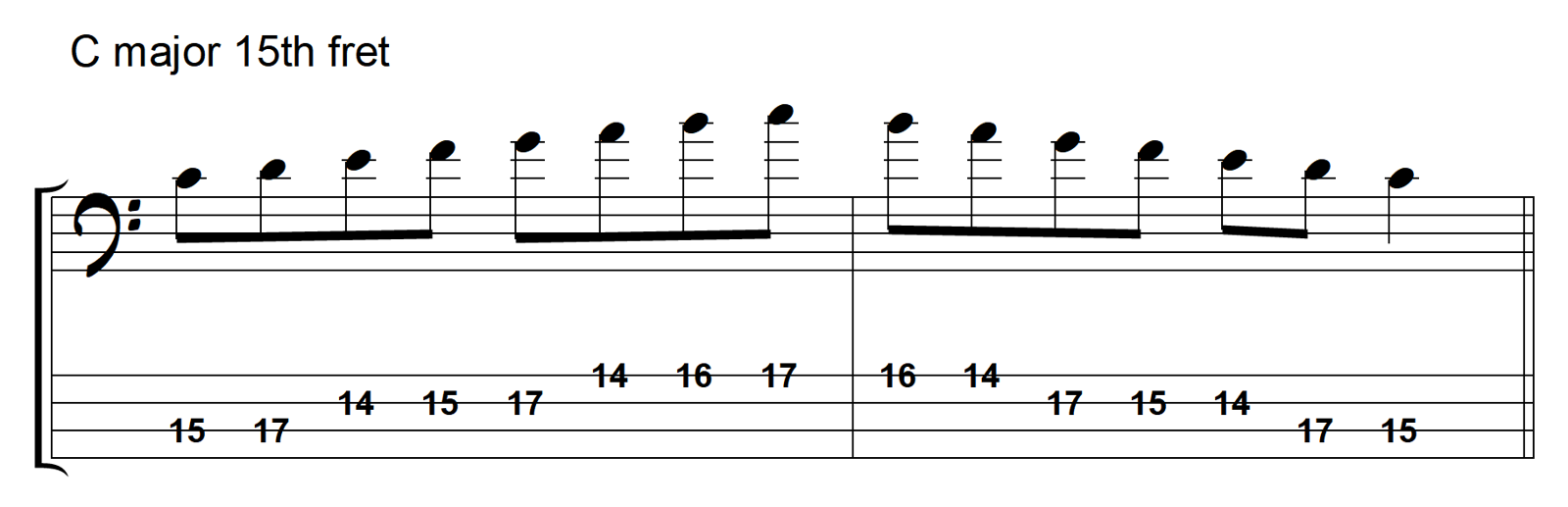
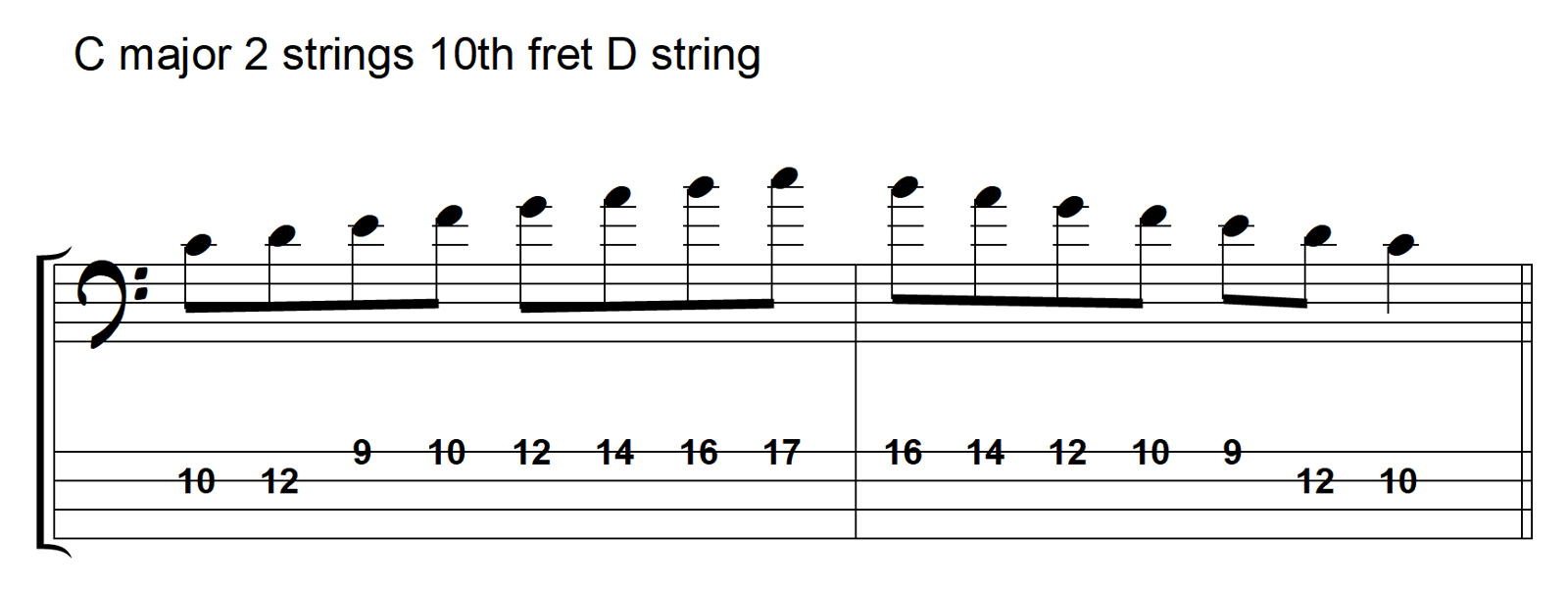
- Now play the 2-string pattern from the C at the 10th fret of the D string. Notice this moves you up into the C major shape at the 15th fret of the A string.
- Practise playing up from the 10th fret and back down — then try using the D string for the transition.
- Now join it all up. Play up through the E string pattern, and when you reach that top C, shift up to the D with your 4th finger. That puts you right in position for the 2-string pattern — so just keep rising.
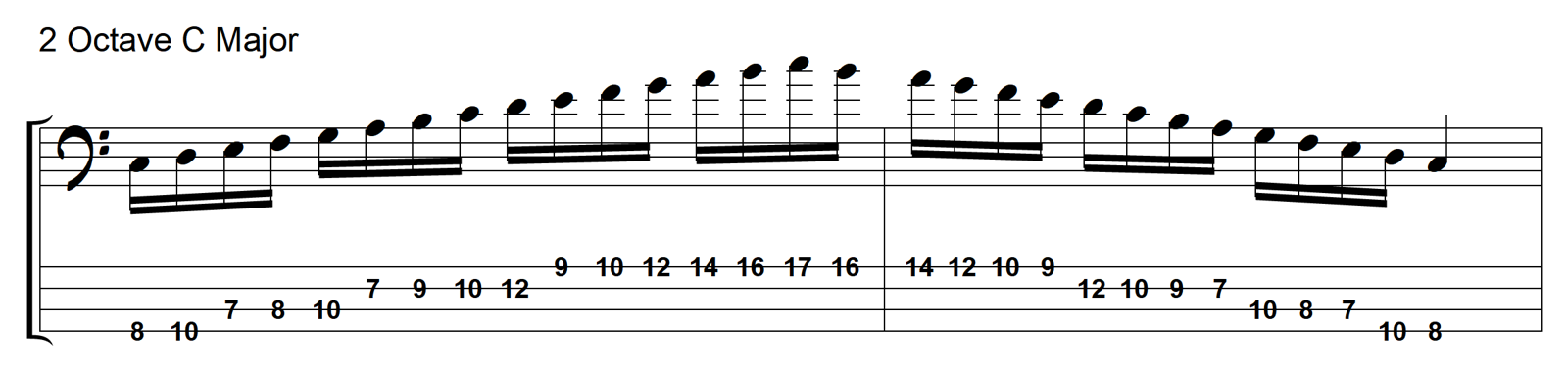
Coming back down: once you reach the C on the D string, continue to the B, then use your 1st finger to drop down a whole step to the A and carry on down through the scale. I’d recommend using the D string as your doorway on the way down — otherwise you end up doing a lot of shifting in quick succession on the G string.
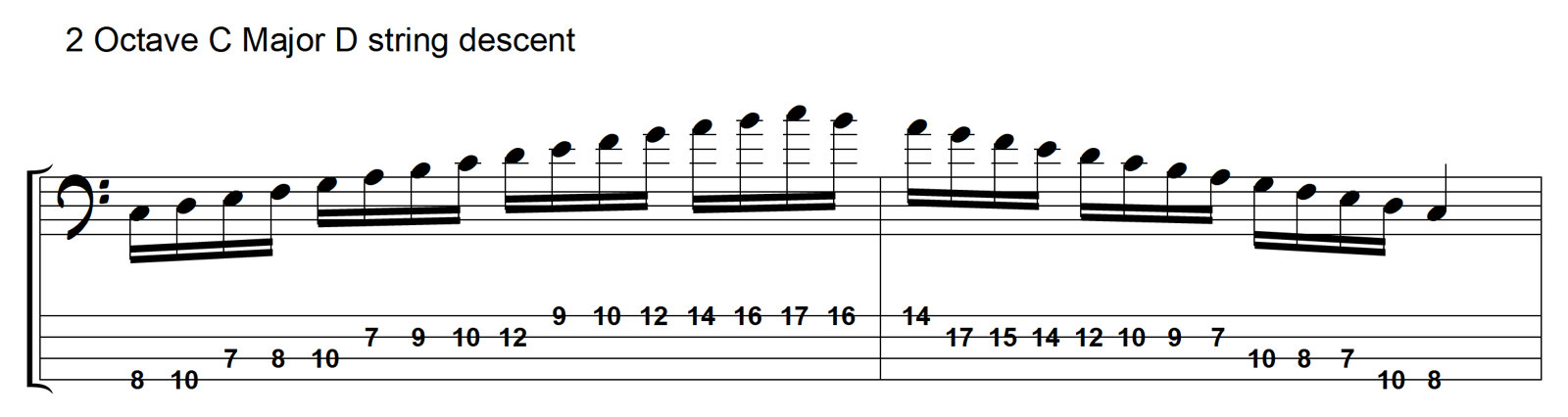
One step further
Finally, try the two-octave scale starting from the 3rd fret of the A string. What we’ve now created is a set of transitions linking three different areas of the bass. Run the two-octave scale round and round, and those shifts start to become instinctive and automatic.
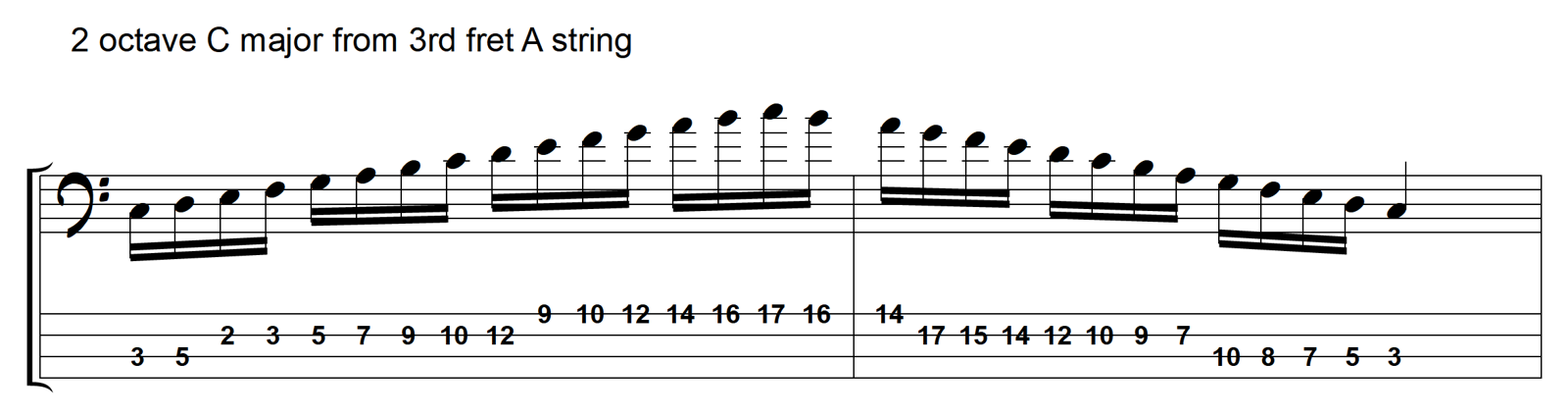
Of course, music doesn’t work as an endless up-and-down scale. Real bass lines, fills, melodies and solos move around both melodically and rhythmically. But this is the start. This is the framework everything else hangs on.
Ready to go way beyond the box?
Today’s lesson is just the framework. Scale Craft For Bass connects scales to harmony — intervals, scale degrees, modes, chord construction and chord scales — then builds that foundation into 25 scale etudes for better technique, position shifting and fretboard fluency.
In module 2, the Practice Multiplier Method takes those 25 etudes and expands them into 3,000 melodic lines — through 10 chord scales in all 12 keys — so you understand exactly how each scale works over each chord.
Launch sale — 30% off. Just $84 (regular $120).
Not ready for the course? No problem at all — get that 2-string pattern under your fingers, start linking up those positions, and let me know in the comments how you get on. Pick up your bass, break out of the box, and I’ll see you in the next one.