
The Walking Bass Secret Every Beginner Needs To Know

Simple Steps To Walking Bass
Learn to build your own walking lines, not just copy them. $160 $112 until Sunday, then the price rises to $220 for good.
See The CourseThe Walking Bass Secret Every Beginner Needs To Know
Walking bass lines are one of the toughest things you’ll encounter as a bassist. You’ve got to create a melodic line in steady quarter notes, outline the chord progression, stay in time, and constantly think ahead to the next chord. It’s a lot to juggle.
But get it right and it’ll transform your playing — not just in jazz, but in every style you play. James Jamerson, the bass player behind those legendary Motown recordings for Stevie Wonder, Marvin Gaye, and the Four Tops, was an upright jazz player first. Those incredible melodic bass lines came directly from his ability to walk.
Start With Chord Tones
The foundation of any walking bass line is chord tones — the notes that make up each chord in the progression. An arpeggio is simply those chord tones played one at a time, and they’re your most reliable tool for outlining the harmony.
Take a simple C major, F major, G major progression. Play the arpeggios of each chord and you can hear the progression moving — you’re outlining it melodically. That’s exactly what a walking bass line needs to do.
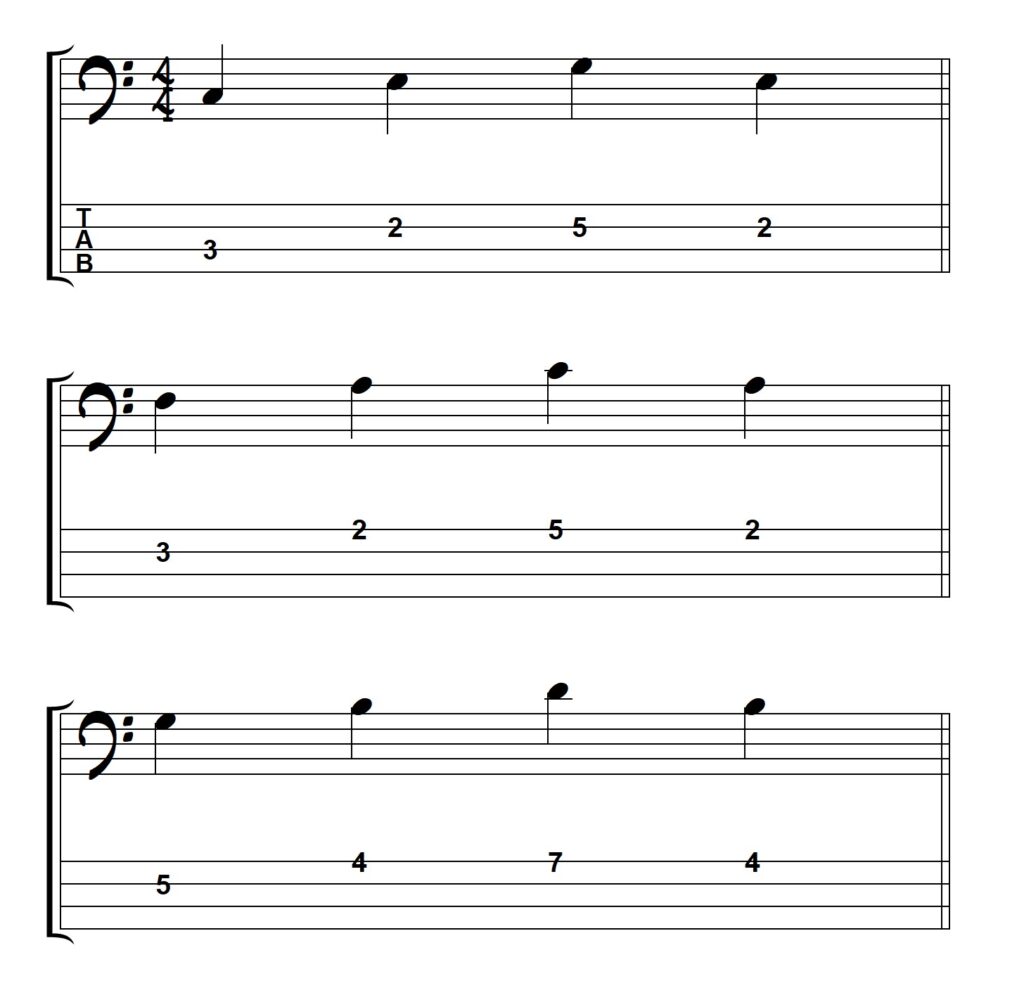
The Two Non-Negotiables
Before you worry about patterns and movement, nail these two things:
Steady quarter notes. Walking bass is built on a constant 1-2-3-4 pulse. Don’t rush it, don’t embellish it until you’re comfortable — just keep it even.
Full note duration. Let every note ring for its full value. Cut them short and you lose the groove entirely. This one makes a bigger difference than most beginners expect.
Building Your First Walking Line
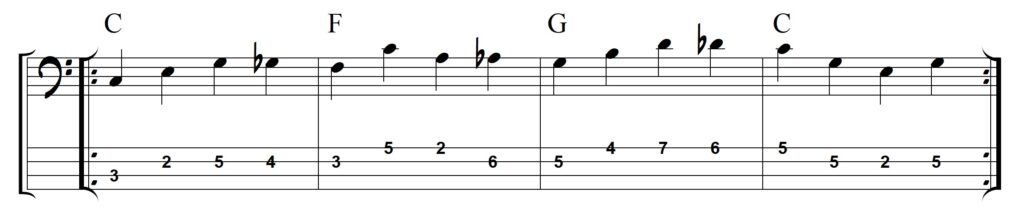
Start by simply moving up and down the arpeggios through your chord progression. It’ll feel angular — lots of jumps — but you’ll be outlining the harmony clearly, and that’s the goal at this stage.
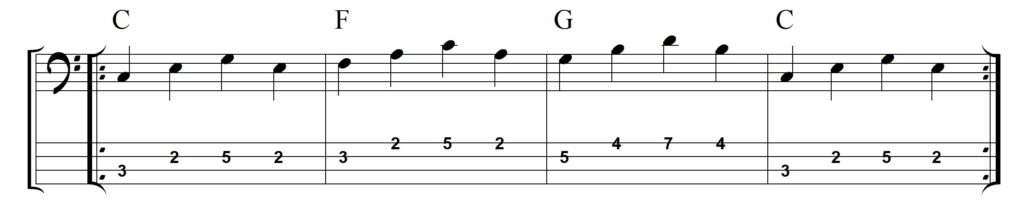
Once that feels comfortable, try mixing up the chord tone order. Root, 5th, 3rd is a great pattern to experiment with.
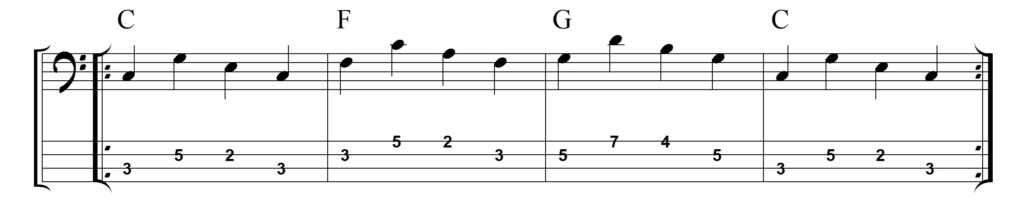
Then try descending through some of the chords for contrast. As long as you’re using chord tones, it’s going to work — just make sure you land on the root on beat 1.
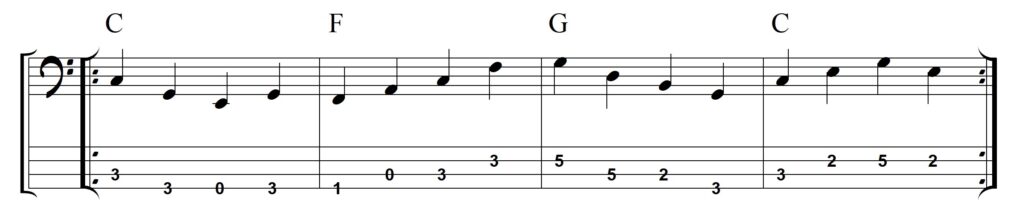
Add a Chromatic Approach Note
When you’re ready to smooth things out, chromatic approach notes are your friend. If you’re heading towards an F on beat 1, try landing on an F# or Gb on beat 4 of the previous bar. It fills the gap, targets the chord, and instantly gives your line a more jazz-flavoured feel.
You can approach from a semitone below or above — both work. Try it with and without to hear the difference.
Keep Experimenting
The key is to keep moving the chord tones around, try different patterns, and always listen for how clearly you can hear the chord progression in your line. You should be able to imply the harmony without any backing track at all.
Get this foundation solid and you’ll start to hear how it connects to everything else — funk lines, Motown grooves, melodic bass playing across every style. It all comes back to chord tones.






Awesome lesson bro
Thank you
Gracias maestro, porfavor si se puede también en idioma en español, soy de chile saludos gran maestro
Very clearly explained and demonstrated. A really helpful lesson. Thank you!
Awesome, thanks!
Great lesson and jam, many thanks 🎼