If you've never been able to walk and don't know where to start.
This is the course I wish I'd had when I was learning to walk.
Simple Steps To Walking Bass is the 63-lesson course that takes you from playing two notes per bar all the way to improvising full walking lines through jazz, blues, and pop chord progressions. Built from the ground up. Step-by-step in bite-sized chunks.
5.0 stars from 25 verified students on the TalkingBass store. Taught by Mark Smith to 451,000+ subscribers on YouTube.
$220
One-time payment · Lifetime access
30-Day Money-Back Guarantee · Instant Access
You sit down with a backing track, a chord chart, and a general idea of how this should work. You play the root. You maybe add the fifth. You try a scale. You try an arpeggio. And then you're stuck, because you don't actually know how to make any of it flow smoothly from one chord to another.
Walking bass sounds effortless when someone good does it. Learning it from scratch is a completely different story.
You've probably tried:
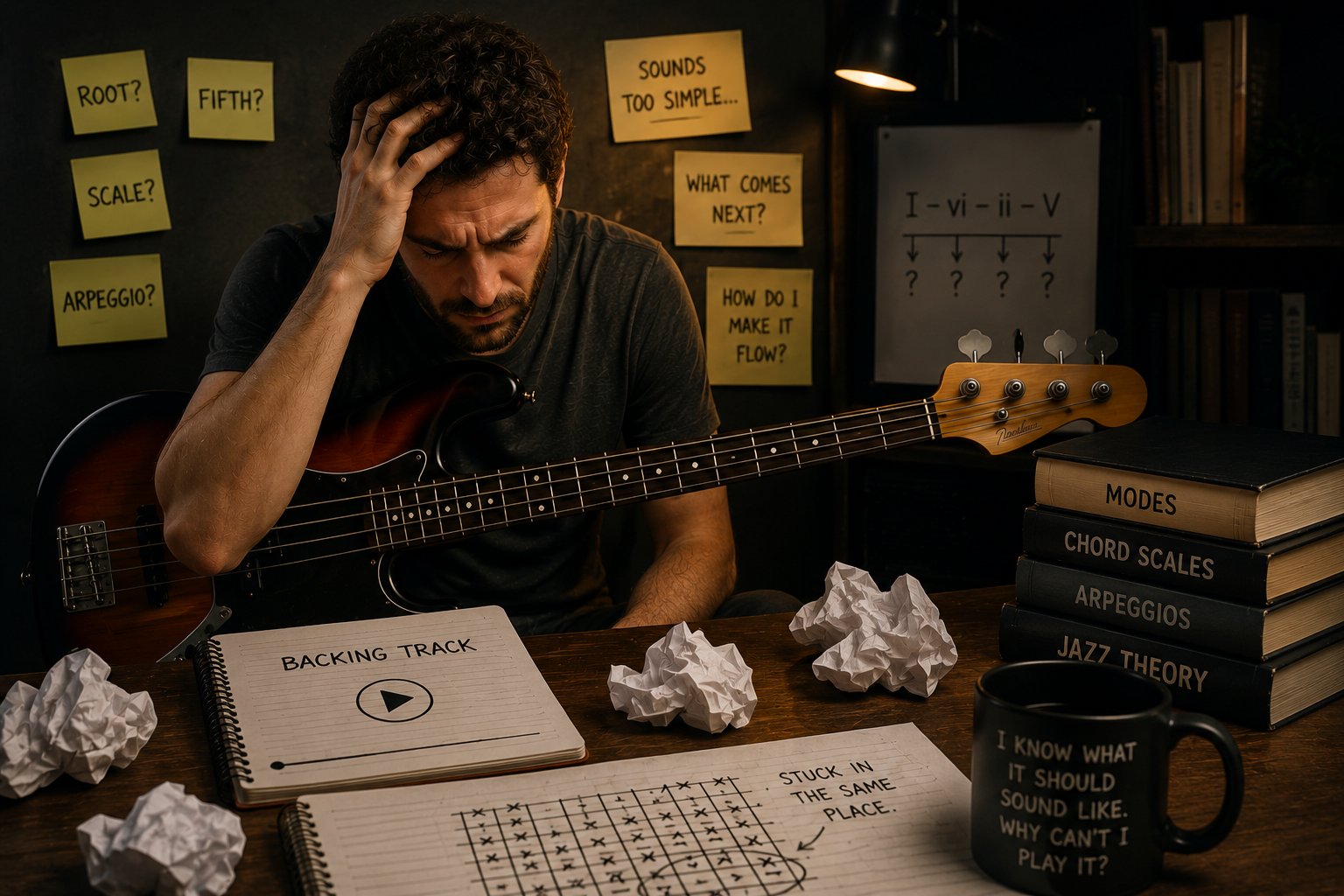
Walking bass isn't hard to understand. It's hard to improvise when nobody's shown you the system underneath it.
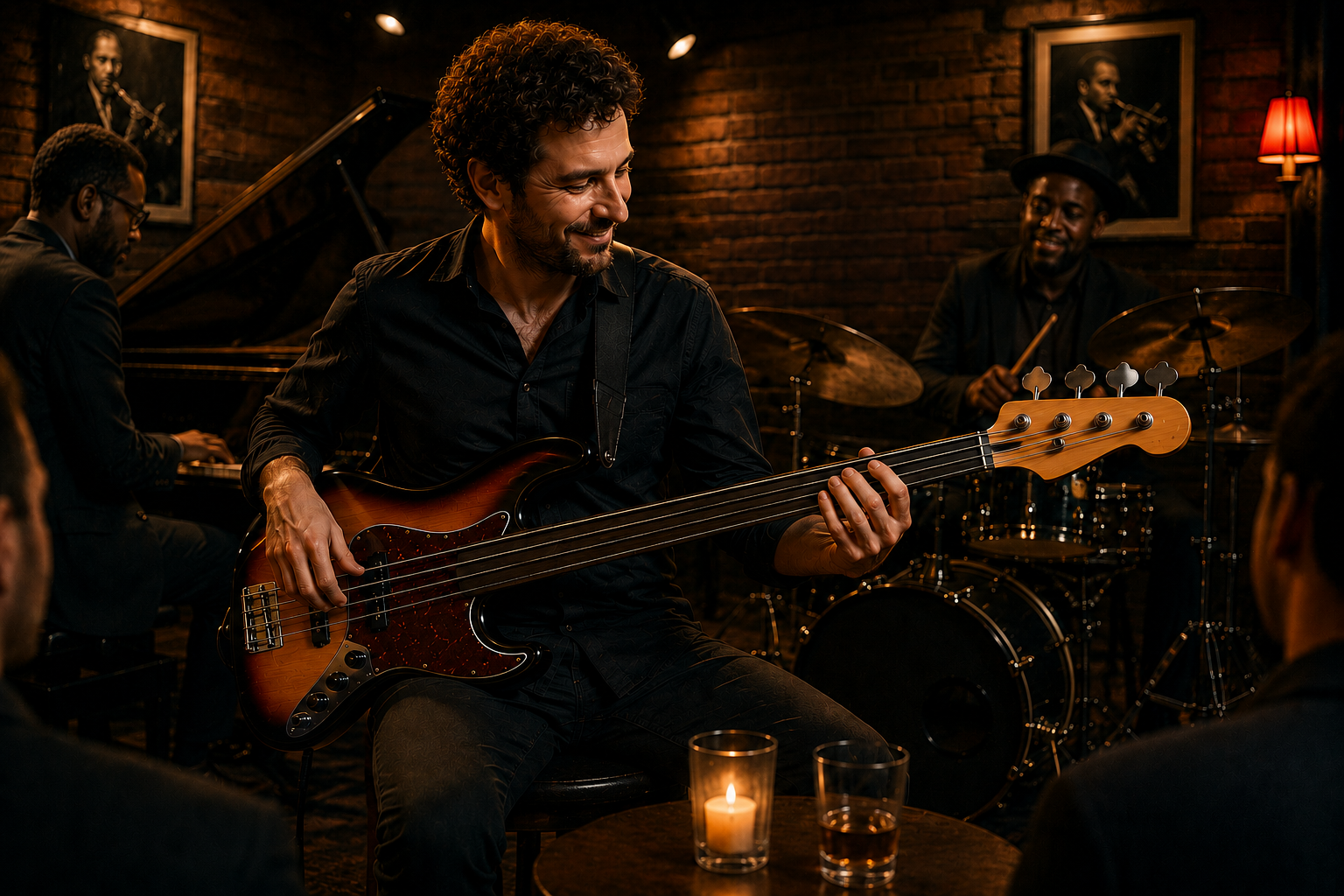
Someone calls a blues in Bb. The pianist comps the changes. The drummer locks into a swing feel. And you walk. You don't just play the root on beat one. You actually walk. Quarter notes, smooth line, one chord to the next on a musical journey over the entire fretboard.
It sounds musical because you know what notes to choose and why. That's where this course takes you.
You'll have the chord tones, scales, and chromatic devices under your fingers, and know how to deploy them on the fly through any progression, in any key.
Position playing, position shifting, three fingering patterns per arpeggio, so you'll stop living in the same four frets and move freely all over the neck.
You'll know what every chord symbol means, which notes are inside it, and which scale fits over it. A Real Book chart stops looking like a foreign language.
Walking bass isn't just notes. It's feel, timing, and musical conversation. You'll develop the rhythmic confidence to be the backbone the band actually leans on.
Practising every progression in every key, through the cycle of fourths, builds fretboard knowledge faster than any other approach. A side effect you'll feel in everything else you play.
Every concept comes with backing tracks in all 12 keys. The material doesn't run out. It deepens. Students come back to this course months and years later and find new things every time.
None of this requires a jazz background or years of theory study. It builds from scratch, one small step at a time. That's the whole point of the method.
The common way to "learn walking bass" is to watch a dozen YouTube videos about modes and chord scales, learn a bunch of arpeggios and scales, and then try to play them over each chord more or less at random. It all makes sense individually and produces nothing usable when you sit down to actually play, because there's no sense of continuity or cohesion. No journey from one chord to the next, and no melodic intent.
The problem is always the same: you've been handed tools without a structure to put them in. Walking bass is about improvisation and vocabulary, not just disconnected scales and arpeggios.
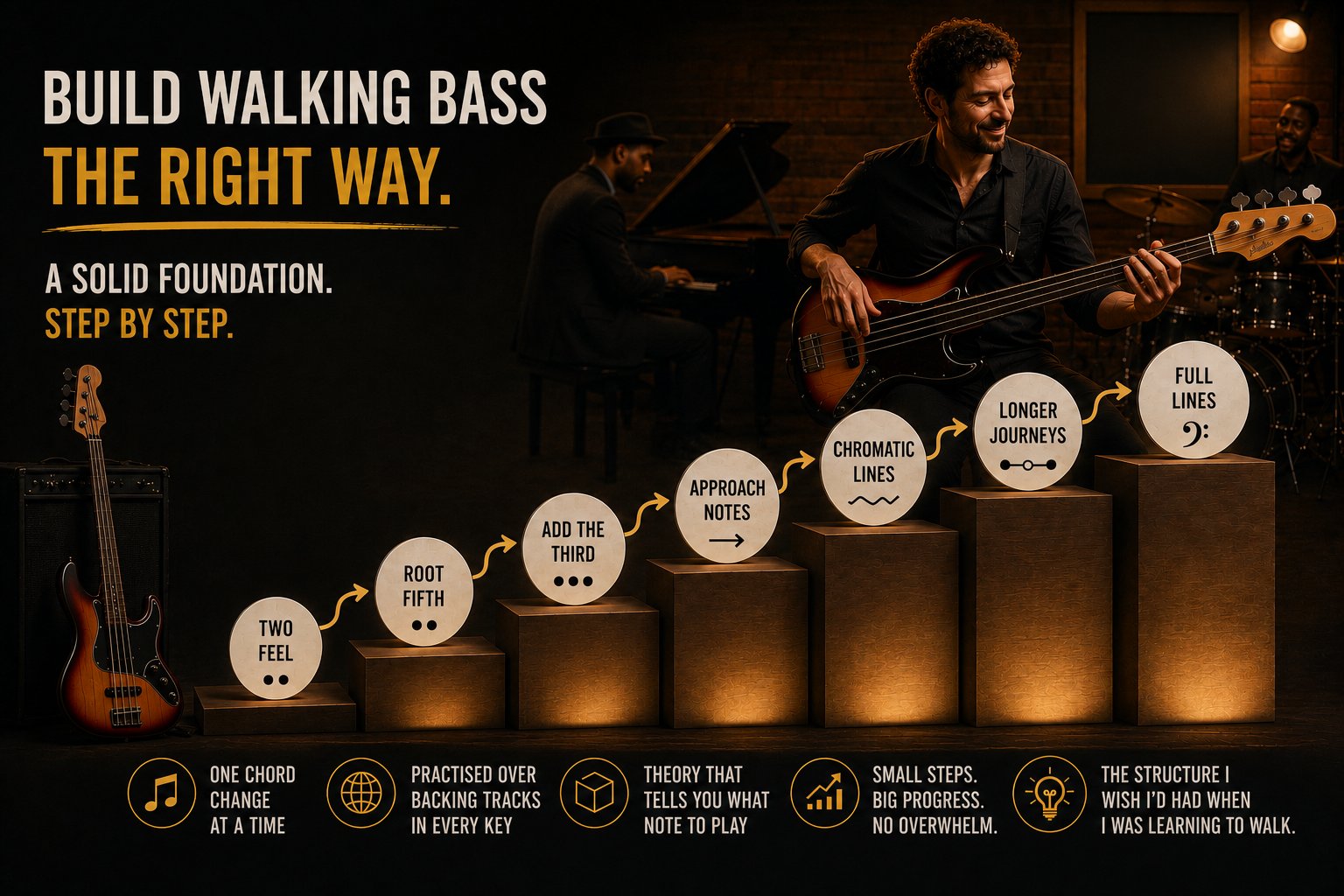
Every walking line is really just a series of short journeys, from the current chord to the next one. Instead of trying to walk through a whole tune from bar one, this course breaks it down to the smallest possible unit: one chord change at a time.
Master the two-feel. Master root-fifth. Add the third. Add approach notes. Add chromatic lines. Each step is simple. Each step is immediately practised over backing tracks in every key. And the thing gets bigger without ever feeling overwhelming.
The theory isn't taught for its own sake. Intervals, triads, seventh chords, modes: all of it is taught because it directly tells you which note to put under your fingers next. You build musical vocabulary the same way you build any vocabulary: one phrase at a time, in real musical contexts, until it starts coming out of you automatically.
I've been teaching bass since 2013 and walking bass is one of the skills I get asked about more than almost anything else. The course took years to develop and refine. It's the one I wish I'd had when I was first learning to walk, back when I was just guessing at notes and hoping for the best.
So, the structure in this course is the thing I had to figure out myself. I've done that work. You just have to follow the steps.
Introducing...
The complete walking bass course for bass guitarists who want to improvise, not just copy.
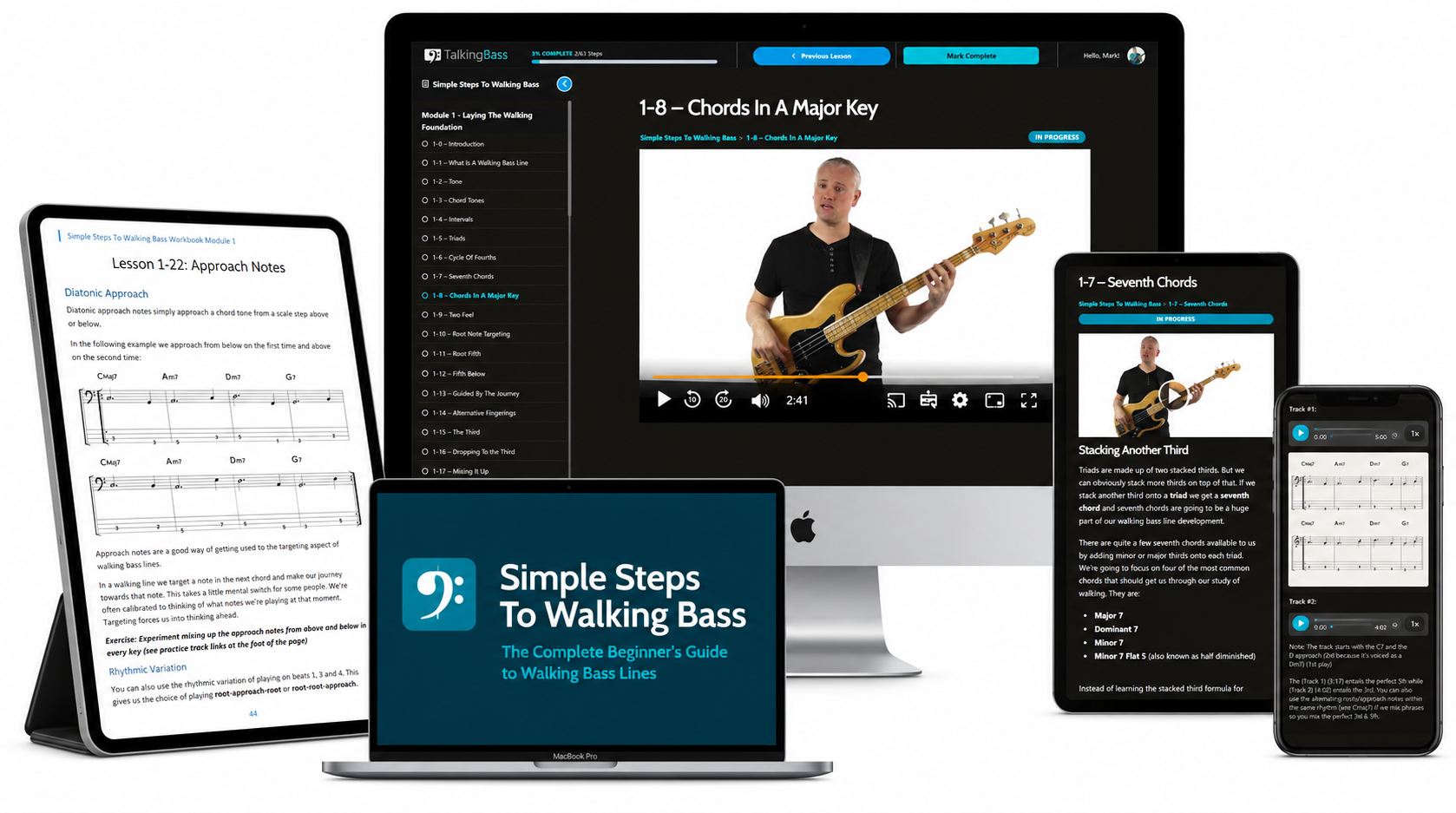
I built Simple Steps To Walking Bass for bass players of any level who want to actually improvise walking lines, not just copy them from a transcription. In 63 step-by-step lessons across three modules, you'll build everything from the ground up: the theory you need, the fretboard knowledge to apply it, and the vocabulary to keep a musical line moving through any chord progression.
Every lesson is bite-sized. There's no live schedule, no deadlines. The course lives on members.talkingbass.net, streams on any device, and it's yours for as long as the site's running, which has been over a decade and counting.
30-Day Money-Back Guarantee · Instant Access
Module 1 · 27 Lessons
Before you can walk, you need the right physical approach and the right harmonic foundation. Module 1 covers tone and articulation first (how to produce a deep, swinging bass tone that actually sounds like walking bass), then works through the essential theory: intervals, triads, seventh chords, the cycle of fourths, and how chords function in a major key.
From there, you'll build a two-feel bass line using root notes, fifths, thirds, and sevenths. You'll learn approach notes (diatonic, chromatic, and enclosures), rhythmic variation, ghost notes, and position playing across the whole neck.
By the end, you can play a musical, varied two-feel in any key, which is exactly the foundation the rest of the course builds on.
Module 2 · 28 Lessons
Module 2 is where the full four-to-the-bar walking line comes together. You'll work through all three elements of walking bass (chord tones, scales and modes, and chromatic notes) with three separate fingering patterns for every arpeggio and scale so you can stay in one hand position through a whole progression.
You'll learn ascending and descending lines, the simple hack for single-chord-per-bar tunes, how to handle two chords in a bar, triplets, walking in three-four time, and how to simplify complex jazz chord symbols down to something usable.
The module closes with vocabulary building, functional harmony, secondary dominants, and the basics you need to understand any chord progression you meet.
Module 3 · 8 Lessons
The final module applies everything to six real-world jazz standard progressions: the kind of harmonic terrain you'll actually encounter when you sit in with a band or open a Real Book.
Each progression is broken down harmonically, a sample walking line is composed and taught, and you're given the tools to write your own. It's the bridge between controlled practice and actual playing.
30-Day Money-Back Guarantee · Instant Access

Three separate workbooks, one per module, covering every lesson in written form. Every arpeggio shape, every scale pattern, every line I play on screen is notated and tabbed. Keep one beside your bass and practise without rewinding video. Students still reference these workbooks years after completing the course.
Every chord progression in the course (1-6-2-5 in major, 2-5-1 in minor, blues progressions, jazz standard changes) is available as a backing track in every key, at multiple tempos. This is what makes the practice actually transferable. You don't just learn a concept in C major. You take it around all twelve keys until it's genuinely under your fingers.

The members site marks every lesson you complete and picks up exactly where you left off. With 63 lessons across three modules, this matters. It's the difference between actually finishing a long course and quietly abandoning it three weeks in.
30-Day Money-Back Guarantee · Instant Access
25 verified student reviews · 5.0 stars
"This is an amazing course. It is way underpriced given what you get: hours and years of lesson material, a well thought out curriculum, and the high quality of Mark's teaching. He has clearly thought carefully about how to best guide a student through the walking bass journey. I went back to the start of Simple Steps to Walking Bass after doing Chord Tone Essentials and Scale Essentials, and revisiting the material, I saw that there is a lot more to this course than meets the eye. I strongly recommend taking this course."
"The course accelerated my fretboard note knowledge, allowing me to walk the entire fretboard instead of mostly using the first through seventh fret. Now I have the confidence to walk the fretboard. I highly recommend this to all bass players, not just those wanting to improve their jazz walking."
"As a 79 year old student I found that having completed the Walking Bass Course made it easier to understand the concepts in Chord Tone Essentials and Scale Essentials. Mark does a fantastic job of breaking down a mountain of material into very small pieces."
"If you do not know what 1-6-2-5 means after that course, there is no hope for you. It was long but it helped me a great deal."
"After years of playing in hobby Bigbands and Jazz quartets it was eye opening to review the concept of walking bass. It gave me a lot of confidence for what I already played and opened up a lot of additional ideas. I am much more aware of what I'm playing and how it fits into playing in a band."
"I've already found that using the skills taught so far I can jam along to backing tracks on YouTube and actually string lines together. Really enjoying learning the whole process both theoretically and practically."
"As a hobbyist returning to playing after many years I was looking for a course which refreshed and consolidated as well as developing my knowledge, understanding and playing. Working through this course has certainly helped me achieve all of this and more. The approach to teaching and learning is spot on and highly effective."
"The explanations are very precise and to the point, making complex ideas easy to understand. The material is well-structured into digestible chunks, so you can progress at your own pace without feeling overwhelmed. Highly recommended for bassists of all levels."
"Really loved this course! It's work, but if you want to get to know your bass in and out then this is the course for you. You will learn your chord tones, your scales, your modes, your fretboard and of course how to walk that bass. Really well taught and a thorough walk through of the topic. Excellent!"
"I have been playing bass for about 30 years, but mostly guitar for the last 20. During the pandemic I started playing more bass again. This course has taught me a lot. I am taking my time with it, and am enjoying it very much. Mark explains things very well."
"Another great course with just tons of content. Much like many other of Mark's classes, this course leaves you with literally years of potential drills to work on. Taking this course you are not only learning to play bass, but building solid music theory which will allow for greater communication with those on other instruments."
"This is my third course here and today it's been exactly one year that I started playing bass. I am very surprised how far I've come and 100% I am satisfied with Mark's courses. I already bought my next one."
"Excellent course! Bought this with the slap bass bundle and I don't regret it. Courses are really detailed but structured in a step by step manner, so this is great for a beginner like me. Can't recommend it enough! Greetings from Poland."

Just try it. If it's not for you, you get every penny back.
Take a full 30 days to work through the lessons, practise the two-feel in a few keys, and see whether the approach is clicking for you. If you don't feel like it's giving you something real to work on, if the lines aren't starting to come, just email me and you'll get a full refund. No questions, no forms to fill in, no friction.
This isn't the fast track. There isn't one. But this is the most direct path I know to being able to actually walk through a chord progression, built one small step at a time, in every key, until it's genuinely under your fingers.
30-Day Money-Back Guarantee · Instant Access
Honest answers, no spin.
30-Day Money-Back Guarantee · Instant Access
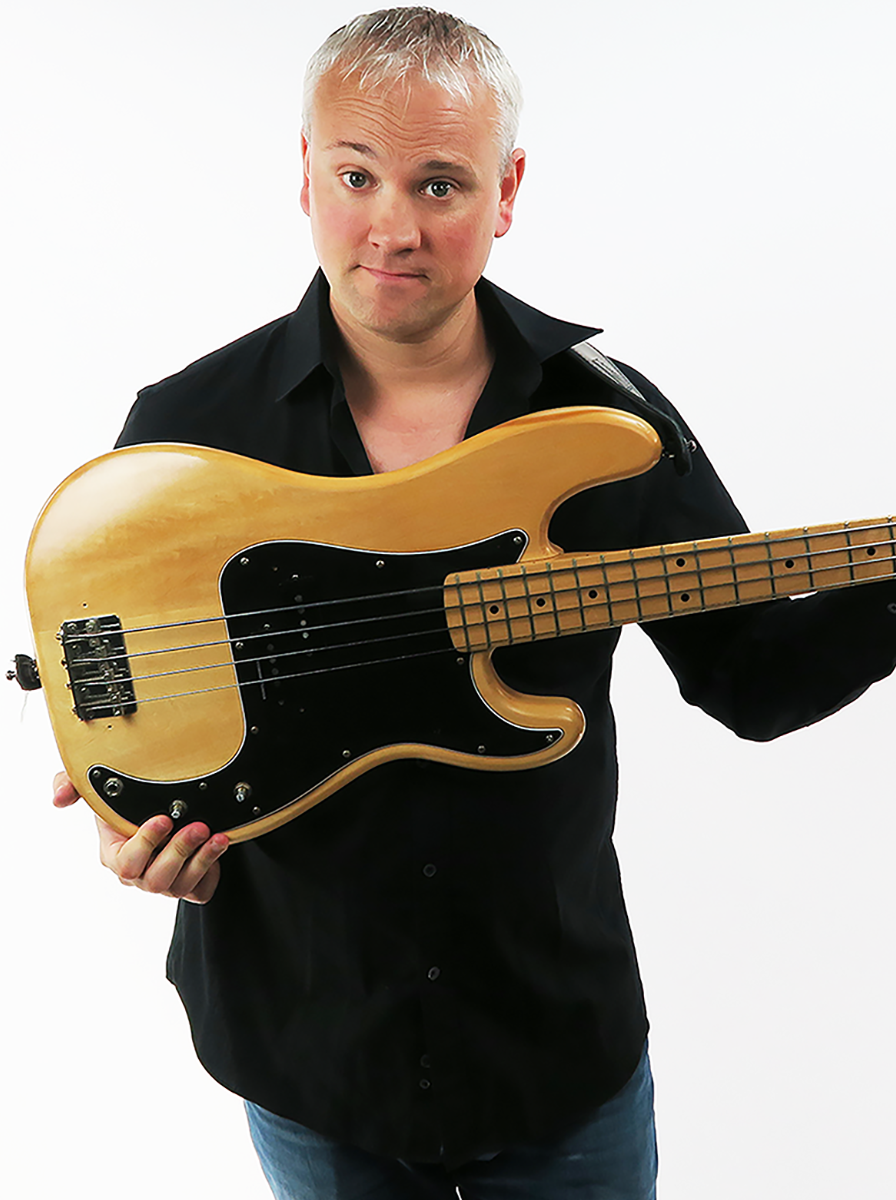
I'm a bassist and teacher from Yorkshire, England. I've been teaching bass online at TalkingBass since 2013. The channel's at 451,000 subscribers now, and the question I get asked more than almost anything else is some version of: "How do I actually learn to walk through a chord progression?"
I built this course because walking bass is genuinely hard to learn without a clear structure. When I was developing it as a player myself, I had to piece together a system from scratch: what to learn first, what order to practise it in, how to build the vocabulary so that notes stop being guesses and start being choices. Simple Steps To Walking Bass is that system, laid out as clearly as I know how to do it.
No hype, no shortcuts. Just the most direct path I know to actually being able to walk. Step by step, one key at a time, until it's yours.
Everything below is included in a single one-time payment. No subscriptions, no recurring fees, just lifetime access to the full course and everything that comes with it.
Simple Steps To Walking Bass includes:
A combined value of $300. The price of Simple Steps To Walking Bass is $220.
One-time payment · Lifetime access
30-Day Money-Back Guarantee · Instant Access
That's Simple Steps To Walking Bass. 63 lessons, built one step at a time, from the first two-feel note all the way to improvising through a jazz standard. If that sounds like what you've been looking for, the link's right there.
